
Ready to put your business in motion? Review current 602Ads campaigns and book your advertisement, or ask about your proposed area and dates.
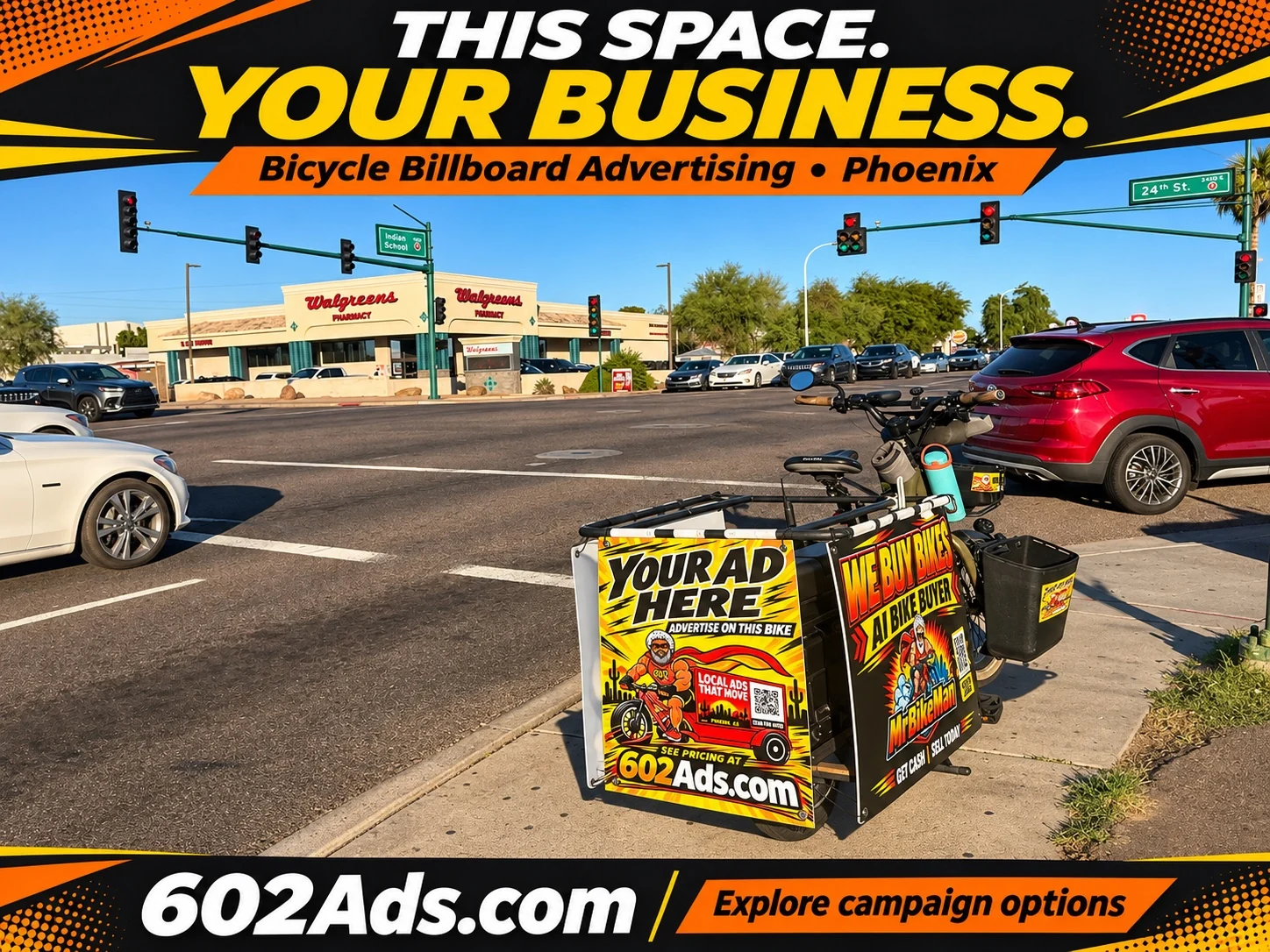
Searching for Phoenix billboard advertising agencies can bring up several kinds of businesses: companies that sell their own displays, agencies that plan and purchase media, creative studios, and operators offering a particular local format. All may participate in an advertising campaign, but their responsibilities are different. Choosing well starts with knowing which kind of help your business actually needs.
This guide focuses on selecting a campaign partner. It does not rank providers or suggest that every company calling itself an agency offers the same services. A useful choice depends on your objective, the work you can handle internally, the proposed media, and the accountability written into the agreement.
Decide which responsibilities you want to hand over
An advertiser may already have approved artwork and a working destination page. That business might mainly need a suitable placement and reliable delivery. Another advertiser may need help defining an offer, deciding where to advertise, developing artwork, and interpreting the response. Those are different assignments, even if both begin with a search for billboard advertising.
List the work you want the partner to perform. Include planning, media recommendations, buying, production coordination, creative revisions, reporting, and communication where relevant. Then identify what remains with your own team. This prevents a common misunderstanding: assuming a media quote includes every task required to turn attention into customers.
Ask whether the company owns, sells, or buys the media
A media owner may recommend inventory it controls. An agency may purchase inventory from outside providers. A local operator may deliver its own specialized format. None of these arrangements automatically makes a proposal good or bad, but the relationship affects what options you are likely to see.
Ask which company is responsible for the actual placement and which company will answer if something changes. If multiple parties are involved, establish who coordinates them. You should not have to discover after launch that the person who sold the campaign cannot explain its delivery or obtain the records you were promised.
Give every prospective partner the same brief
A comparison becomes difficult when each company receives a different description of the task. Prepare a concise brief with the business, offer, target geography, preferred dates, budget boundaries, and desired next action. Include any creative assets or landing pages already available. Clearly distinguish requirements from preferences.
For example, a new retail location might need awareness around its opening, while a law firm might need ongoing recognition for one practice area. The same billboard package may not serve both equally. A good brief helps partners explain their reasoning instead of simply presenting inventory they hope to sell.
Evaluate the reasoning behind the recommendation
Ask why the proposed location or format fits your objective. A useful answer should connect the audience opportunity, message, and next action. “It is busy” is not a complete explanation. A busy location may still have the wrong direction, timing, viewing conditions, or geographic relevance for the business.
Plan your local campaign. Compare 602Ads campaign options and book online.
Request alternatives where appropriate. What would change with a smaller budget? What part of the plan is essential? What is optional? The ability to discuss tradeoffs makes a proposal easier to assess. It also reveals whether the recommendation is tied to your task or mainly to an available package.
Understand how agency fees and media charges are presented
Ask how the company is paid and what appears in the quote. There may be planning fees, creative fees, media charges, management charges, or other agreed costs. Do not assume every agency uses the same compensation model. Request enough detail to understand the full purchase without inventing missing numbers.
A comparison table can separate scope, total cost, production, revisions, reporting, and cancellation terms. Include deadlines and payment stages. If one proposal bundles several services, ask for a clear description of the bundle rather than insisting every supplier price the work identically. The goal is informed comparison, not artificial uniformity.
Review creative work for practical readability
A compelling portfolio is useful, but your campaign also needs artwork that works in the actual format. Ask to see examples relevant to the size and viewing context being proposed. A polished desktop mockup may conceal small type, low contrast, or too many competing messages when the advertisement is viewed briefly.
Discuss the approval process. Who checks spelling, offer conditions, dates, and destinations? How many revisions are included? When does artwork become final? Your business should review factual claims before release. Creative skill and advertiser approval both matter, particularly when the message concerns regulated professional services or a time-sensitive promotion.
Check the handoff from billboard to website
Some agencies stop at the placement. Others may help with the destination and tracking. Establish that boundary explicitly. If your business owns the website work, make sure the page is ready by the creative deadline. If the partner provides it, ask what you receive and who can maintain it afterward.
The page should repeat the advertised business and offer, explain important details, and present a clear next step. Test it on a phone. A great-looking sign cannot repair an appointment form that fails or a promotion page that no longer matches the offer. Assign responsibility for checking both before launch.
Ask for reporting you can actually use
Reporting should begin with what was purchased and delivered. Depending on the format, that may involve placement information, dates, operating records, or another agreed form of documentation. Ask for the definitions behind audience estimates and delivery counts. Do not treat modeled exposure as a list of people who actually noticed the advertisement.
Your own business should also record inquiries and outcomes using consistent definitions. An agency may help structure that process, but it cannot automatically know what happened inside your sales operation. Agree on what information will be shared and how performance will be discussed without sending unnecessary customer details.
Test communication before the campaign begins
Notice whether the company answers specific questions, explains uncertainty, and records decisions clearly. You need an accountable contact, especially when artwork, availability, or timing changes. Ask who provides updates and what happens if your main contact is unavailable. A small team can communicate well; a large team can communicate poorly.
Confirm the escalation path for mistakes. If the wrong creative runs or a promised placement changes, who investigates and who proposes a remedy? Get the process in writing where it affects the purchase. A campaign partner’s value includes coordination when something needs attention, not only enthusiasm during the sales conversation.
A practical example of comparing two proposals
Imagine a restaurant receiving one proposal for a fixed display and another for a street-level moving campaign. The restaurant should compare their geographic purpose, dates, creative requirements, and delivery commitments. It should not divide price by two unrelated audience figures and assume the resulting numbers establish which proposal is better.
The restaurant might discover that one option fits a broad brand introduction while the other better matches a focused local promotion. That conclusion is a planning judgment, not a universal rule. Ask each company to explain the scope and let the business objective drive the decision rather than the more dramatic presentation.
Research providers without confusing examples with endorsements
OUTFRONT’s Phoenix page describes billboard and other outdoor formats in the local market. Lamar’s Phoenix page also describes outdoor offerings and provides inventory resources. These are useful primary sources for understanding their stated services. Availability, pricing, and contractual details still require a current proposal.
602Ads is a bicycle billboard advertising option to consider when that format fits your local campaign. Discuss the proposed area, dates, message, and reporting directly. Do not assume 602Ads is a full-service buyer of every other company’s inventory. Ask for the specific services included in your proposal and compare them on that basis.
Build a shortlist around fit rather than slogans
A short list of suitable partners is more manageable than an endless directory. Evaluate the assignment, reasoning, total scope, creative process, communication, and reporting. Check references or documented examples where available, while recognizing that another advertiser’s outcome does not predict yours.
Be especially careful with promises of guaranteed sales or unexplained audience totals. Ask follow-up questions rather than accepting or rejecting a proposal solely because of its wording. A trustworthy discussion makes the distinction between promised delivery and hoped-for business results clear enough for you to make an informed purchase.
Choose the partner you can work with through the whole test
Before booking, confirm deliverables, responsibilities, deadlines, approvals, payment terms, and the review process. Keep the brief and final proposal together so the campaign can be assessed against the same expectations used to choose it. Give your internal team a copy of the relevant schedule.
Phoenix billboard advertising agencies searches should end with a concrete assignment and an accountable partner. Whether you choose an agency, a media owner, or a specialized local operator, buy a campaign you understand. Clear responsibilities make it easier to launch smoothly, evaluate the result, and decide what your next advertising step should be.
Explore related Phoenix advertising guides
- Affordable Billboard Rental Phoenix
- Outdoor Advertising Agencies in Phoenix
- Billboard Space for Lease Phoenix
- Phoenix Out of Home Advertising
- Phoenix Billboard Sales Companies
Ready to put your business in motion? Review current 602Ads campaigns and book your advertisement, or ask about your proposed area and dates.
Research references: OUTFRONT Phoenix and Lamar Phoenix. Provider offerings were checked November 24, 2026. Current prices and availability require confirmation. No affiliation is implied.
Put your business in motion with 602Ads.
Book your ad
Conversation