A business owner can be a customer while walking to lunch, visiting a supplier or traveling between appointments. That creates an advertising opportunity for companies selling to other businesses. A commercial cleaning company, bookkeeping service or business technology provider does not have to treat every local advertisement as if it were selling a consumer product.
B2B advertising in Phoenix starts by making a professional service understandable to the people who might need it. A bicycle billboard can introduce that service in the local environment, while your website and sales process explain the detail. This guide focuses on business buyers, their purchasing questions and the steps between noticing a company and requesting a proposal.
Choose a buyer problem your sign can express
Start with one business problem you can solve well. Commercial cleaning, payroll support, equipment maintenance and office technology all involve different buyers and different decisions. A single advertisement should not attempt to explain every service your company has offered since it opened. Select an offer that creates an understandable reason to learn more.
Write the problem in language a buyer recognizes. “Office cleaning in Phoenix” is more concrete than “integrated workplace excellence.” The fuller explanation can describe methods, schedules and service standards later. The sign’s first job is to connect your company with a need someone can identify quickly.
Understand who uses the service and who approves it
The person who notices your advertisement may not control the budget. An office manager might collect options, an operations lead might evaluate them and an owner might approve the purchase. Your campaign should help the first interested person pass useful information to the others.
Prepare a service page that somebody can share without writing an explanation of your business. Include what you do, where you work, what kinds of organizations you serve and how the buying process begins. Avoid assuming that an initial inquiry means the person is ready to sign a contract immediately.
Use the supplied image to study message hierarchy
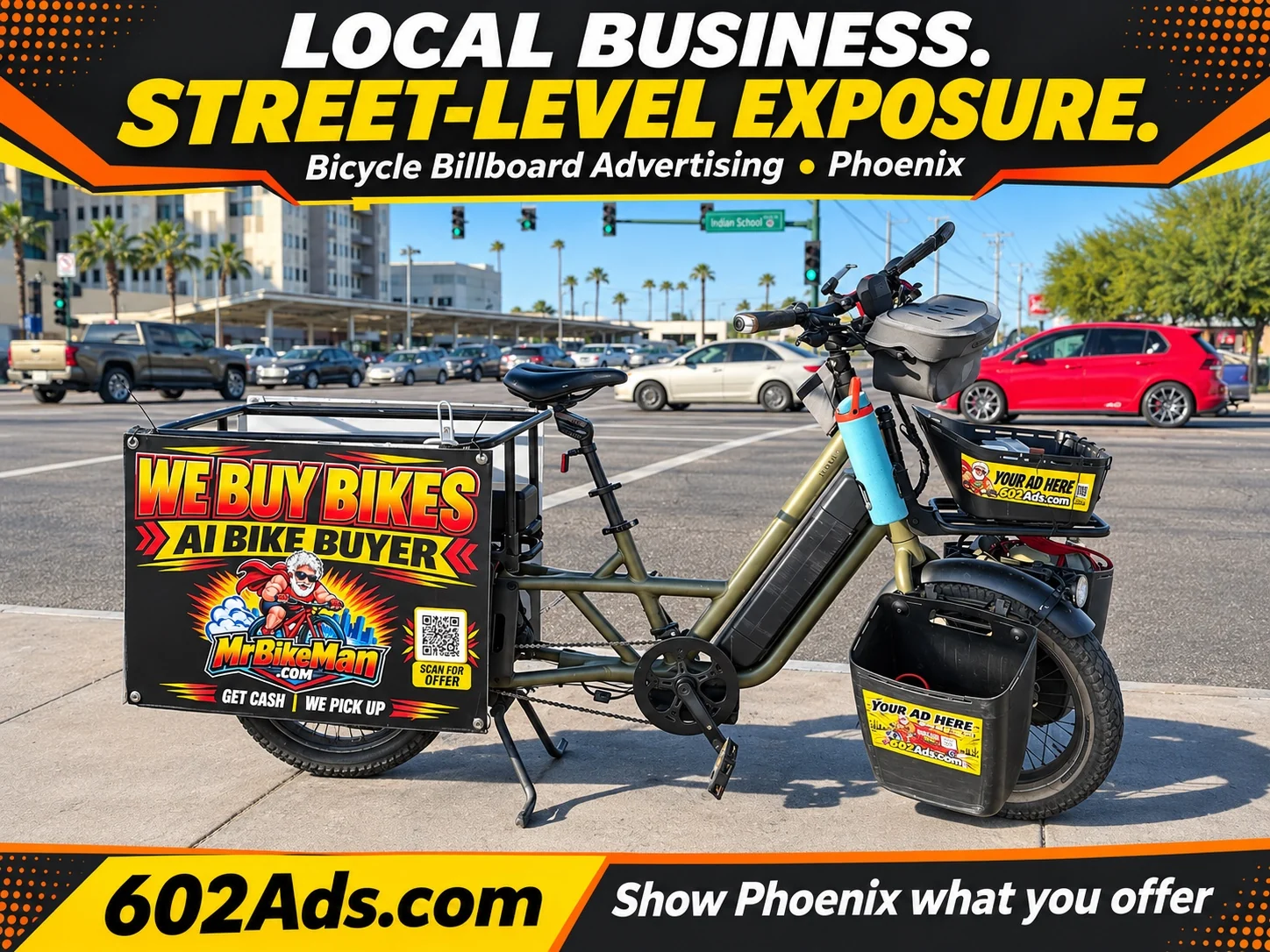
The 602Ads example places a large, direct service message on the bicycle’s side panel. The featured advertiser says what it does in prominent words, with supporting identity and a next step underneath. That arrangement illustrates a useful principle for a B2B campaign: establish the service before adding the supporting detail.
The image is an example of the advertising format, not a B2B customer testimonial. A bookkeeping company or cleaning provider would need its own accurate message and approved artwork. The lesson is to give the main service enough visual priority that a viewer can understand it before trying to remember the brand.
Match geographic coverage to your actual operation
A local service company should begin with the area it can serve reliably. Consider travel time, employee schedules, delivery capacity and any limits on the service. Generating inquiries outside that area can create sales work without creating a practical customer opportunity.
Discuss intended coverage with the advertising provider before promising a particular route internally. Public street visibility is broad exposure. It does not identify the job title of every viewer or guarantee access to private business parks. Ask what area and schedule are actually available for the campaign you are considering.
Offer a sensible first step for a business buyer
Business services often need a conversation about scope before pricing can be accurate. An introductory assessment, a service questionnaire or a request for a written proposal may fit better than a broad discount. Choose a step that helps both sides understand the need without demanding a commitment too early.
Be specific about what happens next. If a visitor requests a site assessment, explain how it is arranged and what information is needed. If you offer a free consultation, define what it covers and whether any conditions apply. An appealing invitation works better when the process behind it is equally clear.
Build a service page somebody can forward
Your page should answer practical procurement questions. Describe the service, relevant business types, service area, working arrangements and contact process. Where appropriate, explain how your team handles an initial assessment and what information is needed before preparing a quote. Use real evidence for any credentials or performance claims.
Include a short summary near the top for people sharing the page with a colleague. Keep important details in readable text rather than hiding everything inside an image. Our billboard landing page guide explains how to continue the advertisement’s promise through a focused inquiry page.
Prepare evidence that fits the buyer’s concern
Choose supporting material that answers a real question. A buyer concerned about scheduling may want to understand your service hours. A buyer concerned about consistency may want your documented process. If you use testimonials or case studies, obtain permission and describe actual work accurately.
Do not invent company logos, customer results or years of experience to make the page look established. A new provider can still explain its process, qualifications and boundaries clearly. The credibility of the details matters more than filling the page with impressive statements that cannot be checked.
Keep the billboard readable at street level
Professional services can become wordy. Remove internal jargon and choose one service headline, a recognizable business identity and one response route. A printed bicycle display needs different artwork from a proposal cover or a presentation slide. Long lists of capabilities compete with the information people should remember.
Review the final design at the actual production size. Ask someone unfamiliar with your company to explain what the sign offers after a brief look. Our Phoenix billboard design guide provides useful checks for contrast, hierarchy and message clarity before printing.
Make the response process fit business inquiries
An inquiry form can ask for company name, service location and a brief description of the need. Keep the first step manageable. Request only information that helps you decide whether the project fits and who should handle it. A long vendor questionnaire may be appropriate later in the process.
Let the buyer choose an appropriate contact method where practical. Some people prefer email because they need a written record or must consult colleagues. Explain your usual response timing accurately and assign responsibility for follow-up. A campaign should lead to a process somebody actually monitors.
Track opportunities through the sales process
Record the inquiry source, requested service, location and next step. Then track meaningful stages such as a qualified discussion, assessment, proposal and completed sale. The amount of information needed will depend on your business, but a basic consistent record is more useful than relying on memory.
A proposal request can be valuable without producing a sale that week. Review outcomes over a period appropriate to your buying cycle, and note the reasons opportunities close or stop. Our guide to tracking mobile billboard leads can help organize the campaign side of that review.
Support referrals rather than relying only on direct response
Someone may remember your service and mention it to another business owner. Give that person a clear name and destination to share. A specific service description is easier to pass along than an abstract slogan. The website should confirm the same identity and offer that appeared on the sign.
Ask new inquiries how they first heard about you, allowing for more than one influence. A referral might begin with outdoor advertising and finish through a personal recommendation. Record what the customer says without forcing the answer into a single channel merely to make reporting look simpler.
Use a hypothetical campaign to test your plan
Imagine a Phoenix company offering scheduled office cleaning within a defined service area. Its bicycle billboard could introduce that service and direct viewers to a short website address. The page could explain suitable properties, service scheduling and how to request an assessment. A team member would review inquiries and arrange the next step.
This is a planning example rather than a reported customer result. The provider would need to confirm its offer, capacity and actual campaign coverage. Walking through the example helps expose missing decisions, such as who prepares proposals or whether the company can serve the locations it intends to advertise.
Evaluate the campaign as part of a broader buying journey
For B2B services, visibility may help someone recognize a company before they need a quote. It can also support a referral or a later search. Keep those possible roles separate from a guarantee that an advertisement will produce contracts. Your own response records should guide decisions about repeating or changing the campaign.
Compare the scope and evidence offered by advertising providers. Our billboard advertising quote checklist covers production, coverage and reporting questions. A defined campaign with a useful next step gives your business a clearer basis for evaluation than promises about becoming the dominant provider in town.
Put your Phoenix business service in the picture
The supplied 602Ads image invites local businesses to imagine their own message on a moving display. For a B2B advertiser, that message should identify a service buyers can understand and lead to information they can review or share. Start with a specific problem, a serviceable area and a response process your team can manage.
Ask 602Ads about bicycle billboard advertising for your Phoenix business. Share the service you want to promote, your intended area and preferred dates. We can discuss available campaign options. Your sales team can then build on local visibility with the practical information business buyers need to take the next step.
Put your business in motion with 602Ads.
Book your ad