A storefront sign gives a business a visible place in the neighborhood. If your company visits customers, collects items, delivers a service or works by appointment, you may have no window for people to walk past. That does not remove the need for local recognition. It changes where your advertising needs to appear and what it should ask people to do.
Advertising a business without a storefront in Phoenix starts with a clear service promise and a response method that fits how you operate. A bicycle billboard can introduce that promise beyond your website. This guide explains how to make the message, service area and customer journey work together when there is no walk-in location.
Explain how customers work with your business
Begin by stating the operating model in ordinary language. Do you visit homes, serve businesses at their premises, collect items, deliver orders or schedule appointments? People should understand the arrangement before they try to visit an address or ask where your shop is.
Put that explanation near the top of your service page. If customers request service online, show the request button clearly. If appointments require confirmation, explain the process. A business can appear organized and credible without a public storefront when the customer knows what happens after making contact.
Choose a service message that stands on its own
Your outdoor advertisement needs enough context for somebody unfamiliar with the company. Lead with the service or customer problem, then connect it to your name. A brand slogan may sound appealing internally while leaving viewers unsure whether you clean homes, repair equipment or provide business support.
Include a useful operating detail when it helps the decision. “We come to you” can clarify a mobile service when that statement accurately describes the offer. Keep qualifications and service limits available on the destination page. Avoid promising availability or coverage your business cannot reliably deliver.
Use the supplied advertising image as a format example
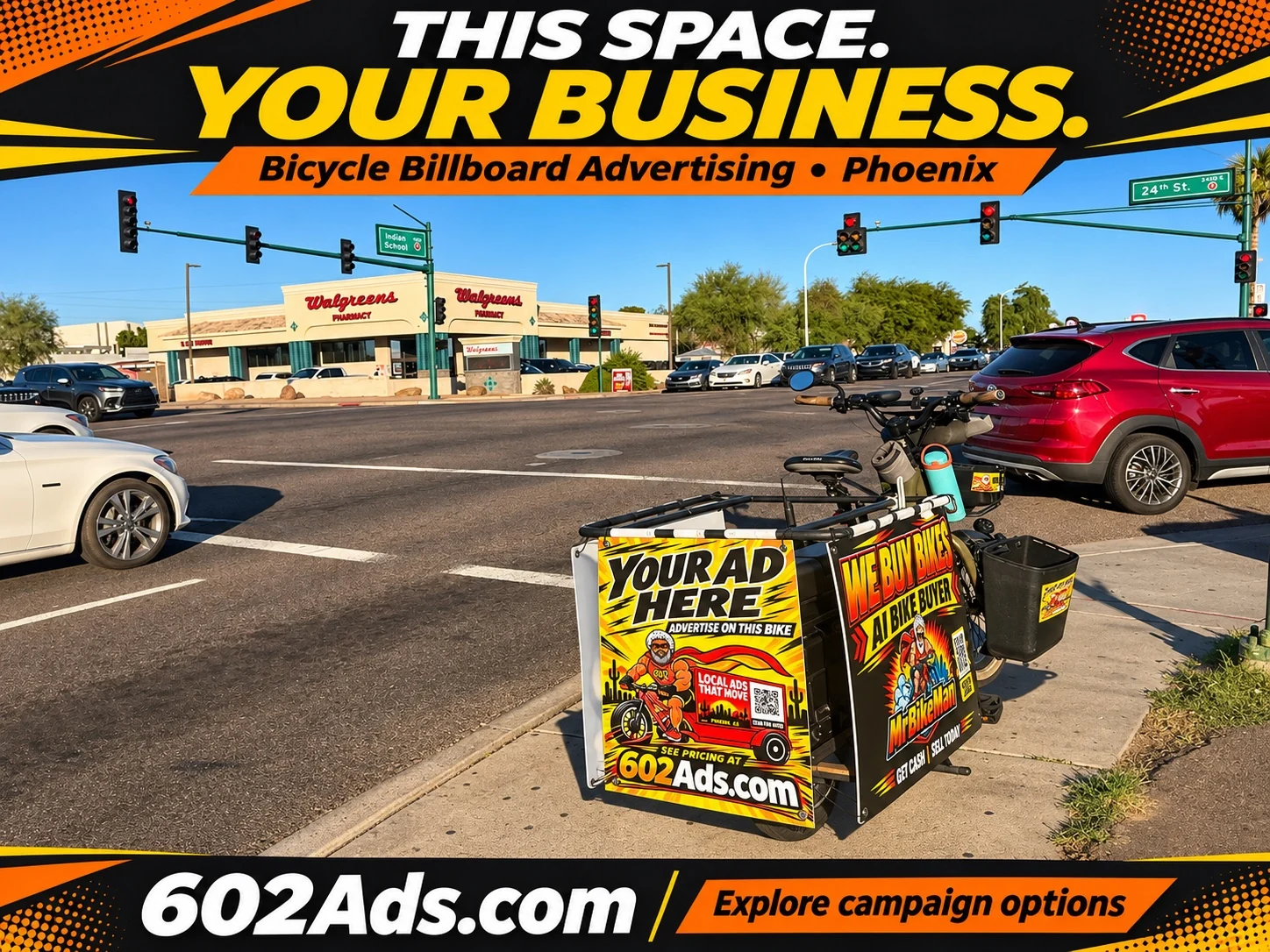
The 602Ads image shows a bicycle display with a prominent “Your Ad Here” panel near a Phoenix intersection. It illustrates an advertising surface separate from a business’s own premises. A local advertiser can introduce a service through the display even if customers never enter an office or shop.
The surrounding scene provides visual context, not proof of the number of people reached. The customer message would need its own artwork and campaign plan. Treat the example as a way to picture the format, then ask about available coverage, dates and reporting for your actual business.
Define a service area you can support
List the locations where you can provide the advertised service with workable travel time and staffing. Consider whether different services have different coverage. A company might deliver one service broadly while offering another only close to its base. Explain those boundaries before encouraging people to submit requests.
Ask your advertising provider about available routes that fit that area. A campaign near potential customers does not automatically cover every neighborhood you mention on your website. Start with an agreed geographic scope and expand only when your operations and the provider’s availability support the change.
Give the advertisement a destination other than a door
For a business without walk-in service, the useful next step may be an online request, service-area check or appointment inquiry. Use a short address people can remember and visit later. The page should confirm the same company, service and operating model shown in the advertisement.
Avoid directions such as “stop by today” when there is nowhere for customers to visit. Do not substitute an unrelated address to make the business appear to have a storefront. Your campaign can direct customers to a clear online process that matches the service you actually provide.
Build trust through practical information
Customers may want to know who will visit, how an appointment is confirmed and what information is needed to begin. Explain the process in useful detail. Include accurate business identity, contact options and service expectations. Use genuine photographs and only publish reviews or credentials you can substantiate.
A clear process can answer concerns a storefront might otherwise help resolve. If estimates depend on the job, explain what happens before a final price is agreed. If your service has limits, make them easy to find. Credibility comes from a reliable experience supported by accurate information.
Keep business listings consistent with your model
Google provides specific guidance for eligible businesses that visit or deliver to customers. Its service-area business guidance explains that businesses not serving customers at their address should remove that address from the public profile and list their service area instead. Review the current eligibility rules for your own operation.
A purely online business is not automatically the same as a service-area business eligible for a local profile. Follow the applicable guidance rather than assuming every business without a shop qualifies. Keep the operating model consistent across your website, business listings and advertising so customers receive the same practical instructions.
Make the first form easy to complete
Ask for the information needed to identify the service, location and next step. A postal code or city can help check coverage. A short description can help route the inquiry. Avoid requesting a large amount of personal information before explaining why it is needed.
Test the form on a phone, including required fields and error messages. Confirm that the customer receives a useful acknowledgment. Our billboard landing page guide describes how to keep that response experience connected to the sign’s promise.
Show what happens after the request
A confirmation screen should tell customers whether they have submitted an inquiry, received an estimate or booked a confirmed appointment. Those are different outcomes. Avoid language that makes a tentative request appear to be a guaranteed service slot.
Describe the next communication and give a realistic expectation for timing. If customers need to provide photographs or additional details later, explain that step. Assign someone to review responses so the billboard does not lead people into a process that looks active but receives no follow-up.
Use a printed message that stays useful
Printed advertisements work best when the central message remains accurate throughout the agreed campaign. A stable service introduction can be more manageable than a promotion tied to a few remaining appointment slots. If you do use dates or availability claims, discuss how artwork changes would be handled.
Keep the design focused on one offer and one response route. Our billboard design guide explains readability checks. The supplied images use strong visual hierarchy; your own sign should preserve that clarity while describing your service accurately.
Prepare for questions about your location
Write a consistent answer for customers who ask where the business is located. Explain the area served and how appointments or requests work. If there is no public walk-in office, say so plainly. Staff, website messages and automated replies should provide the same answer.
Use recurring questions to improve the page. If people keep asking whether they must bring an item to you, clarify pickup or visit arrangements where applicable. If inquiries come from unsupported areas, move the coverage explanation earlier in the journey. Each question can reveal a missing piece of information.
Measure useful inquiries and completed work
Record whether inquiries fall within your service area and match the advertised offer. Track appointments requested, appointments confirmed and completed jobs. These measures can help you see whether the campaign reaches people your business can actually serve, rather than merely producing a larger inbox.
Ask how people heard about you while allowing for multiple influences. A customer may notice a bicycle billboard and later search your name. Our mobile billboard lead-tracking guide offers practical ways to organize the evidence without promising exact attribution for every response.
Consider a hypothetical mobile-service campaign
Imagine a Phoenix service provider that works at customer locations by appointment. Its sign could introduce the service and direct people to a short request page. That page could confirm coverage, describe the visit process and collect the information needed to review an inquiry.
This is an example of campaign structure, not a reported customer result. The company would still need to confirm its capacity, approve the offer and arrange available campaign coverage. Reviewing the complete journey before booking helps reveal gaps that a more attractive advertisement alone would not fix.
Evaluate local visibility alongside your other channels
A website helps people investigate a business after they find it. Outdoor advertising can introduce the name in a physical setting. Referrals and customer follow-up may also contribute. Choose the combination your operation can maintain, with a clear role for each part.
Review inquiries alongside seasonality, staffing and any other promotions running at the same time. Avoid treating every improvement or slowdown as the effect of one advertisement. Use what customers report and what your business records to decide whether to repeat, revise or expand a campaign.
Build a visible Phoenix brand without a storefront
A business can establish a clear local presence through an understandable service, consistent identity and reliable customer process. The bicycle billboard supplies a physical introduction; your team and website carry the relationship forward. Make sure each part explains how customers can actually work with you.
Ask 602Ads about a Phoenix bicycle billboard campaign for your service business. Share your operating model, service area, intended message and preferred dates. We can discuss available options so your campaign gives local people a clear introduction and a practical next step, even when you have no storefront window.
Put your business in motion with 602Ads.
Book your ad